
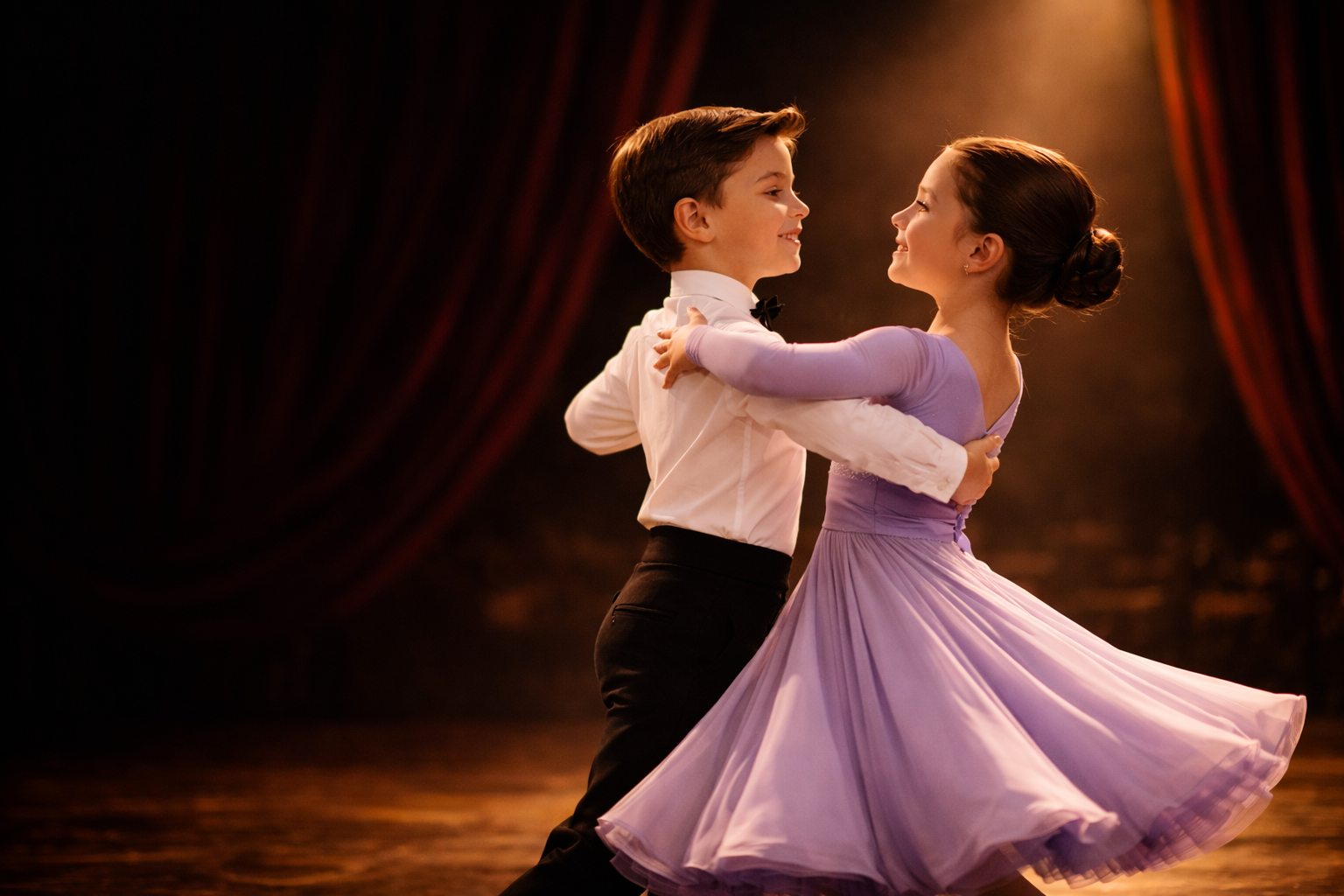
AFTER—SCHOOL BALLROOM DANCE PROGRAM | TK — THROUGH 5TH GRADE
Give your child an invaluable gift of confidence, social grace & poise.
The most elegant dance form — at your child's school. It builds confidence, discipline, and social skills that last a lifetime.
A DIFFERENT STANDARD
The hours after school are as formative as the hours within it.
A child who learns to move with grace, to meet the world with confidence, and to work toward something meaningful alongside others — carries those qualities everywhere. Into every classroom, every friendship, every room they will walk into for the rest of their life. These qualities take time, structure, and the right environment to develop. And the window to build them is shorter than most parents realise.
Learned early, they will distinguish your child in any social, academic, or professional setting.
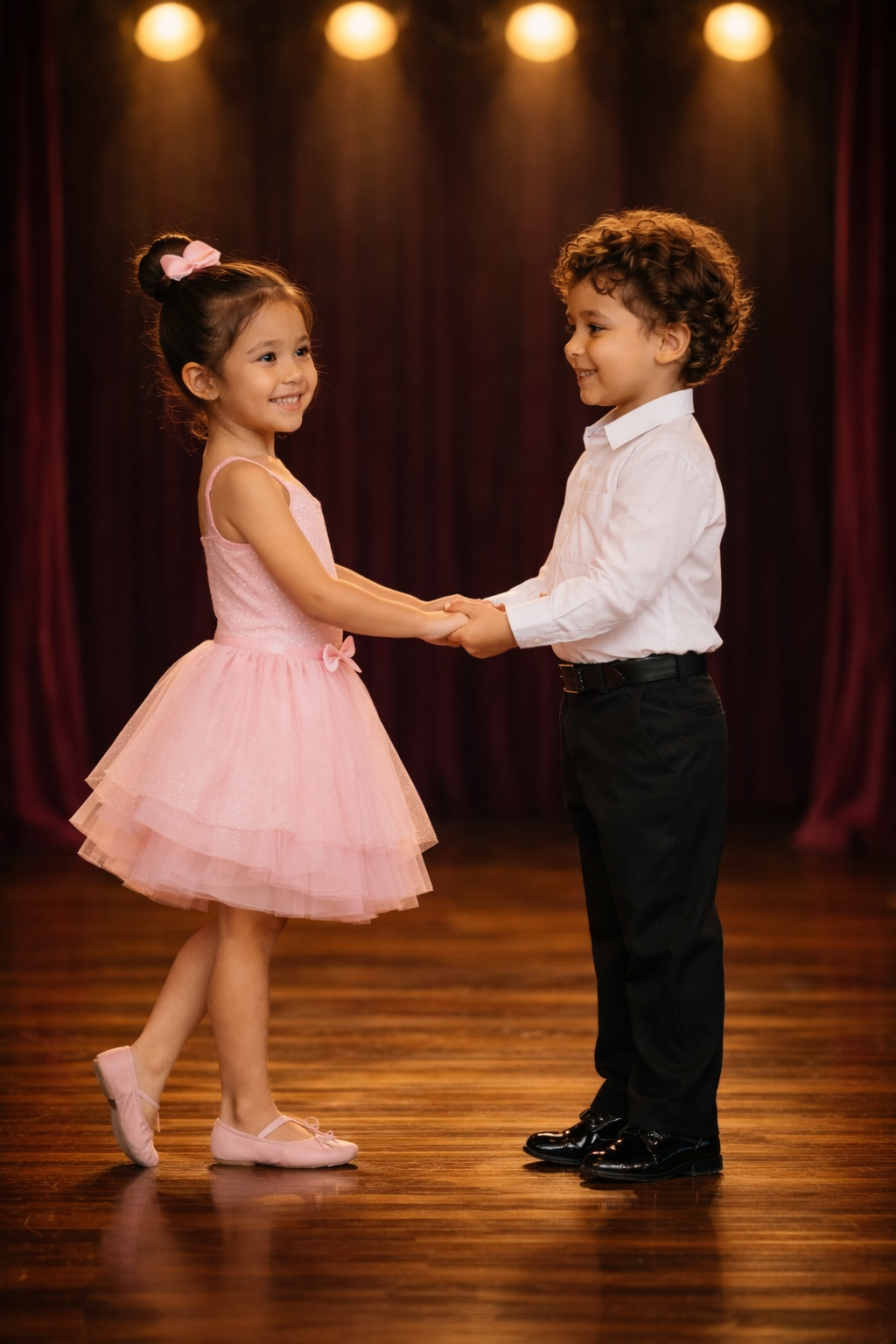
The most elegant dance form — at your child's school.
WHY BALLROOM DANCE
Confidence & Character
Builds poise, presence, and social grace — and teaches children how to carry themselves in any setting.
Social Skills
Develops real human connection, respectful communication, and the confidence to interact with ease.
Academic Benefits
Improves attention, discipline, and memory. Children in structured arts programs consistently perform better in school.
Physical Development
Improves posture, balance, coordination, and body control through full-body movement.
Life Skills
Teaches initiative, accountability, and goal-setting — habits that extend well beyond the dance floor.
Emotional Wellbeing
Helps children manage stress, build confidence in social situations, and develop emotional resilience.
For Boys Too.
Ballroom gives boys a clear leadership role — guiding a partner with confidence, focus, and purpose.
Dance is more than movement.
THE SCIENCE BEHIND IT
According to Harvard Medical School, dancing helps develop new neural connections — especially in regions involved in memory, focus, and executive function. It also reduces stress and increases serotonin levels. Of eleven physical activities studied, dance was the only one found to lower the risk of dementia. The mind and body working together — that is what makes dance uniquely powerful for a growing child.
PROGRESS & STRUCTURE
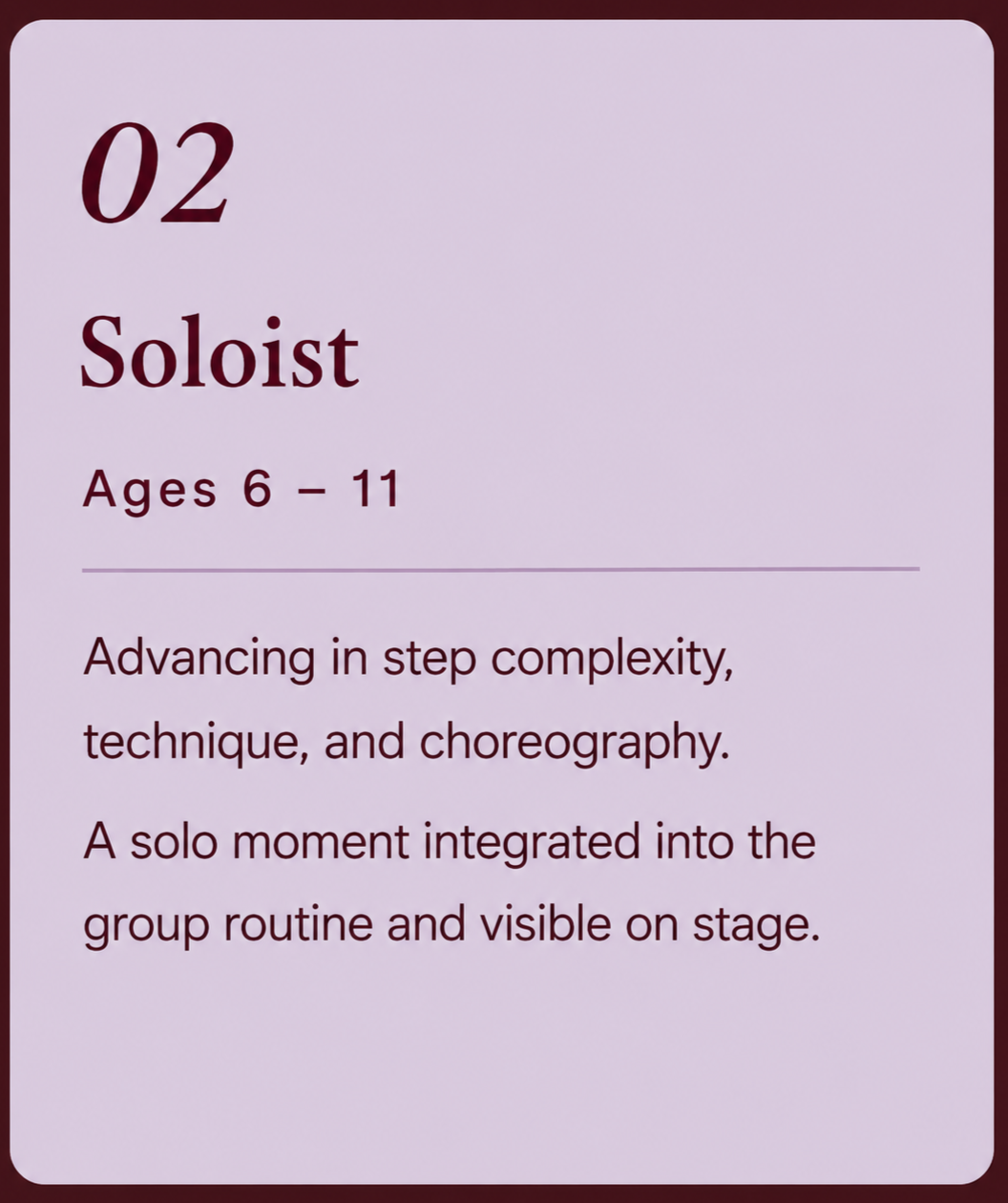
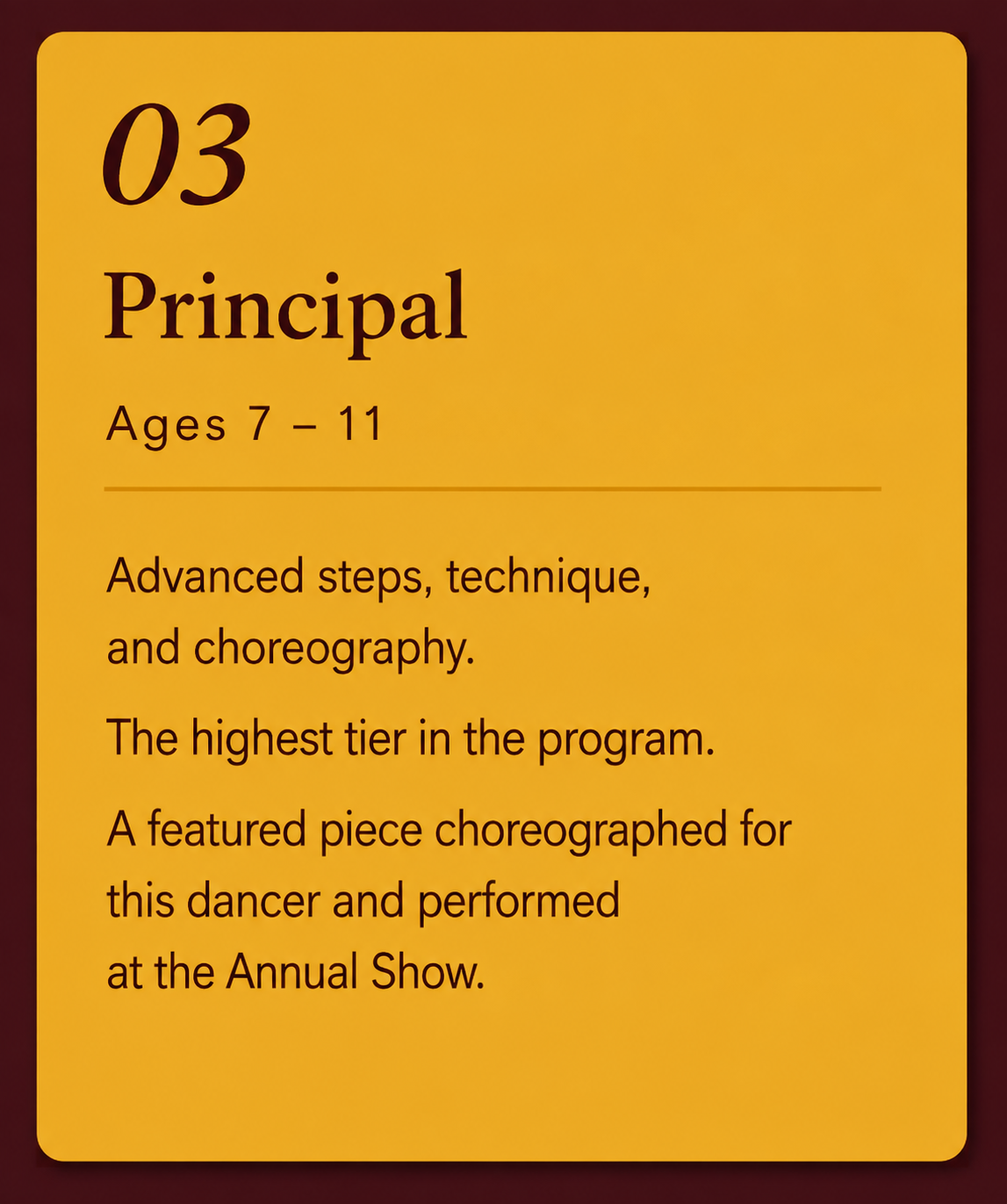
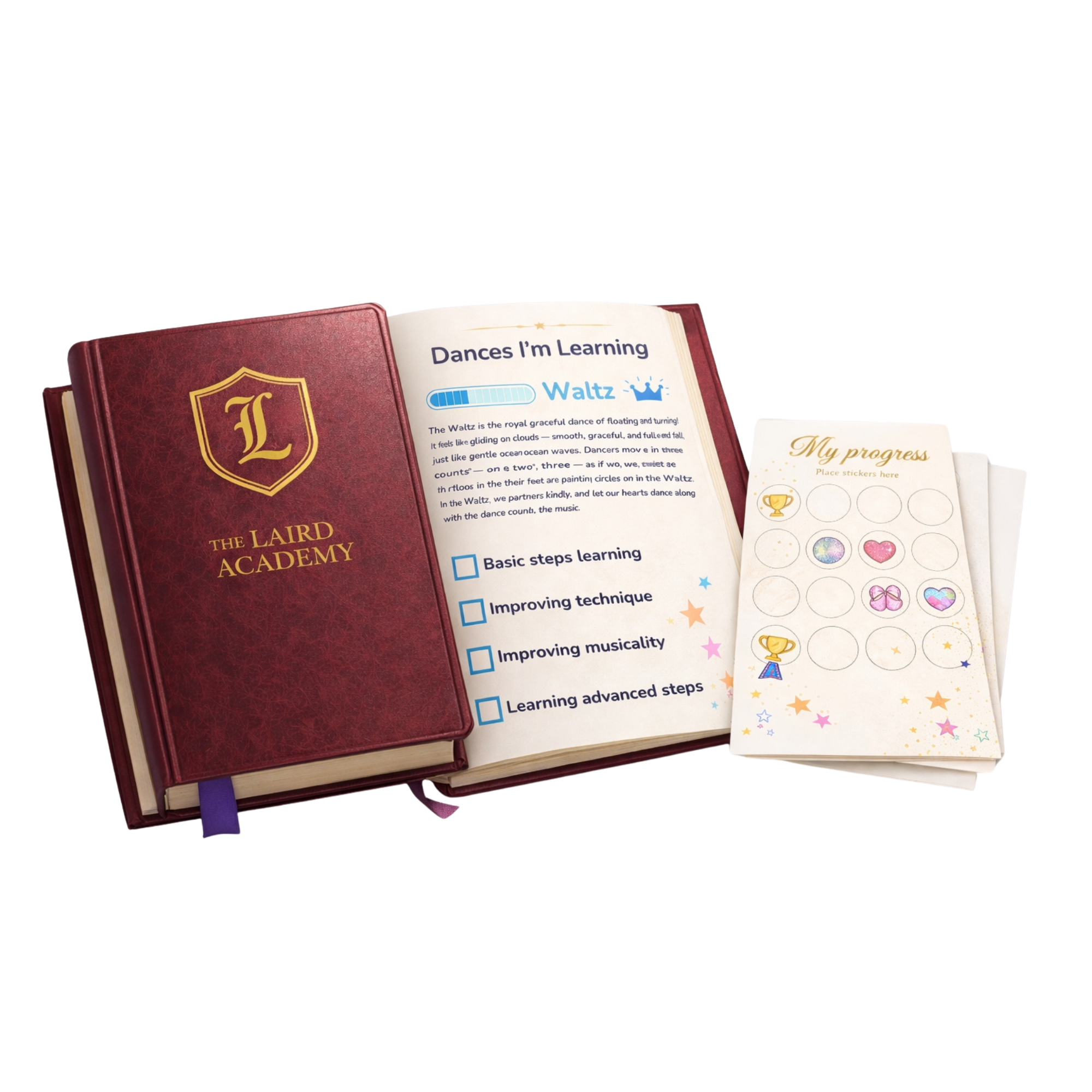
Each academic year builds toward one shared goal — the Annual Show. As the year progresses, choreography grows more complex, and technique steadily improves. Every student receives The Dance Book to track progress and celebrate achievements throughout the year.
Skill development over time.
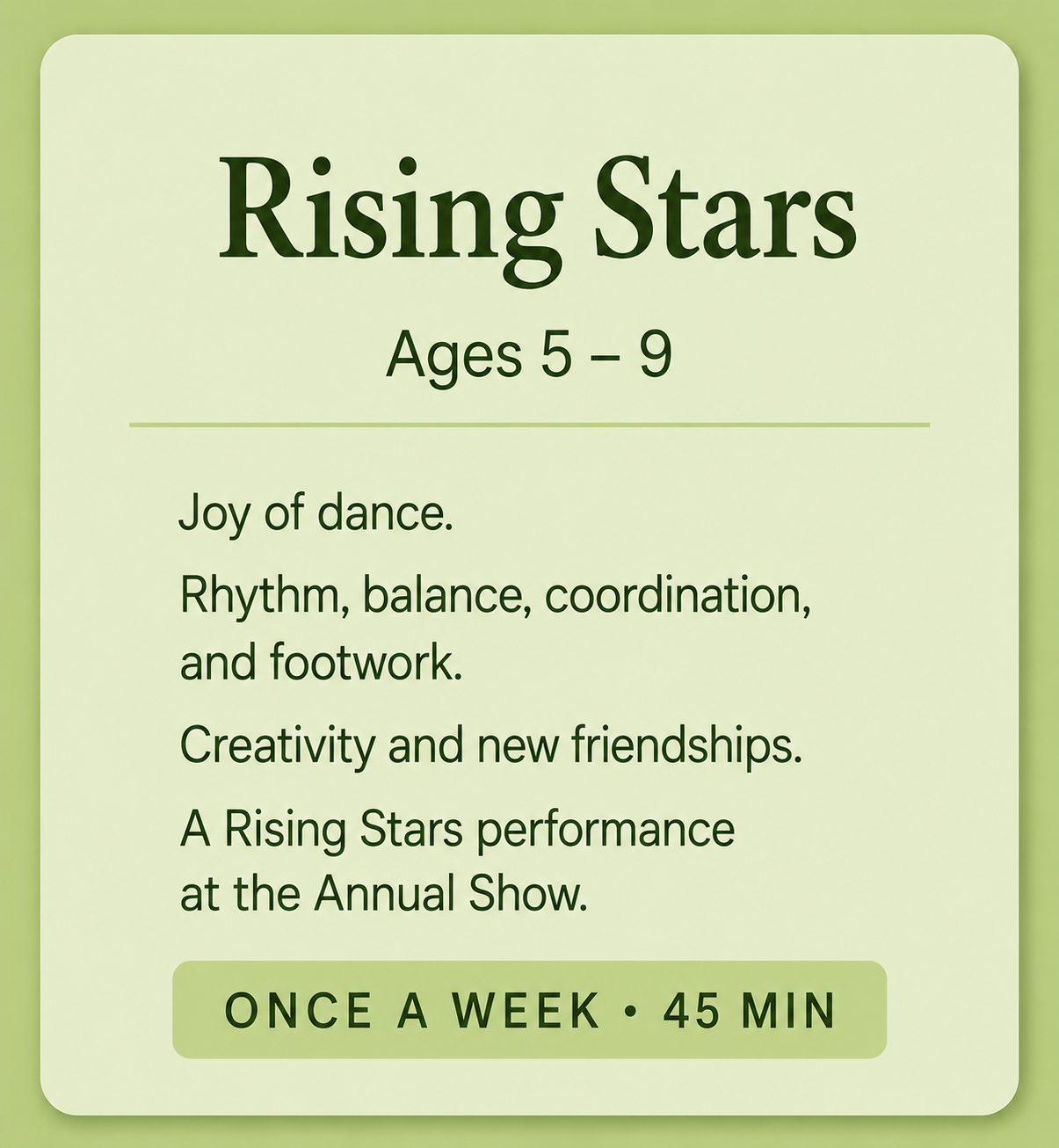
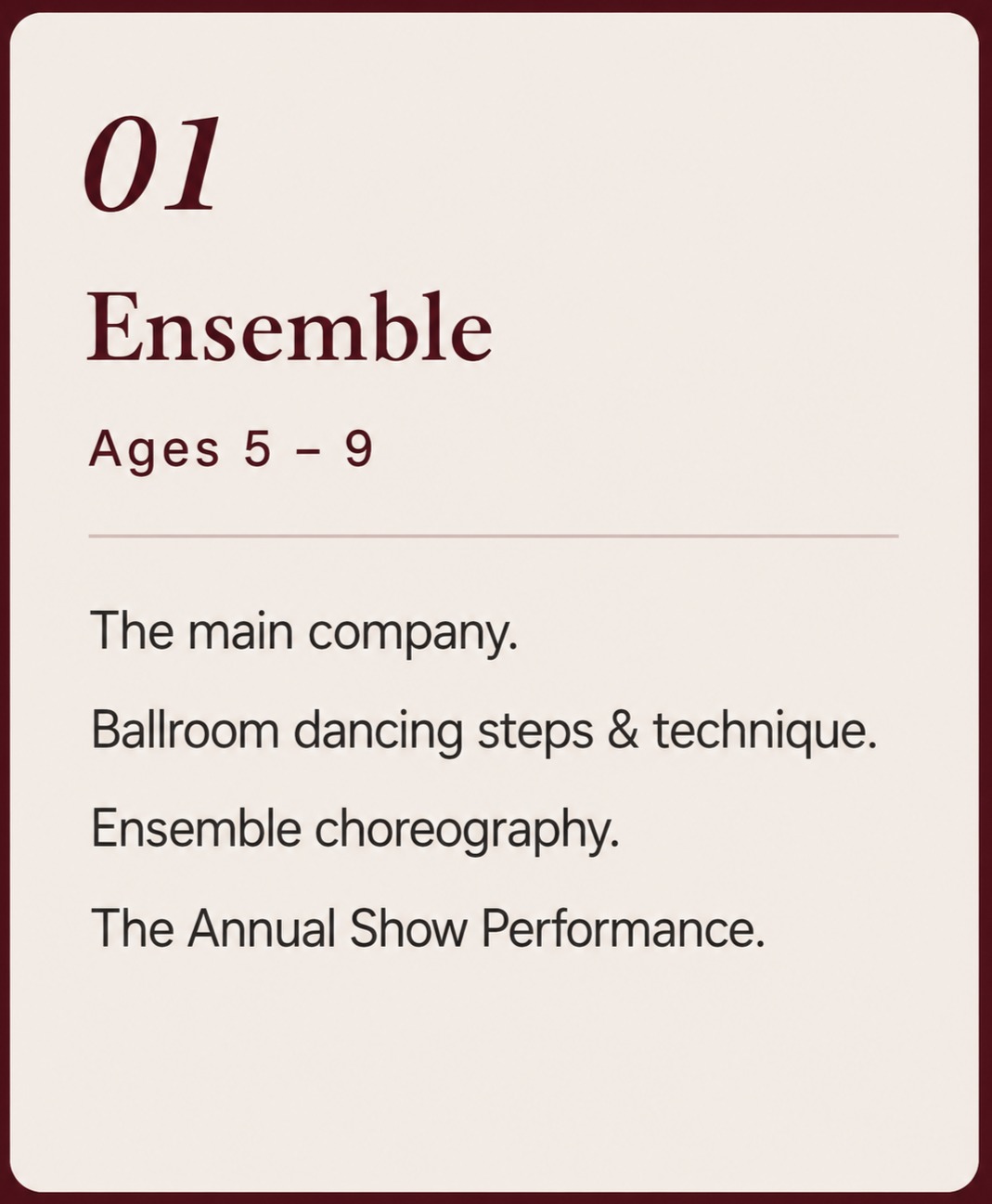

At the Laird Academy, children learn so much more than dance!
THE PROGRAM
Our program has a lasting place in a child's development. Ballroom dancing builds confidence, poise, and social grace, skills that stay useful throughout life.
Unlike other dance forms, ballroom is practical. A child who learns it early will always feel comfortable on a dance floor — from middle school dances and high school formals to weddings and galas as an adult.
Skills for life

Rising Stars to Principal tiers. Our program is designed to meet every student exactly where they are with a clear path forward in a structured environment. The skills built along the way extend well beyond the dance floor:
Teaches kids to take initiative and lead
Builds decision-making skills
Encourages accountability and responsibility
Develops discipline, persistence, and goal-setting
Progress & Structure

Presence & Self-Presentation
Performance is where every dancer discovers:
How to carry themselves and how to make a good first impression
How to hold their presence in front of an audience
How to move with grace under pressure
What it means to be part of a team where every individual matters to the whole
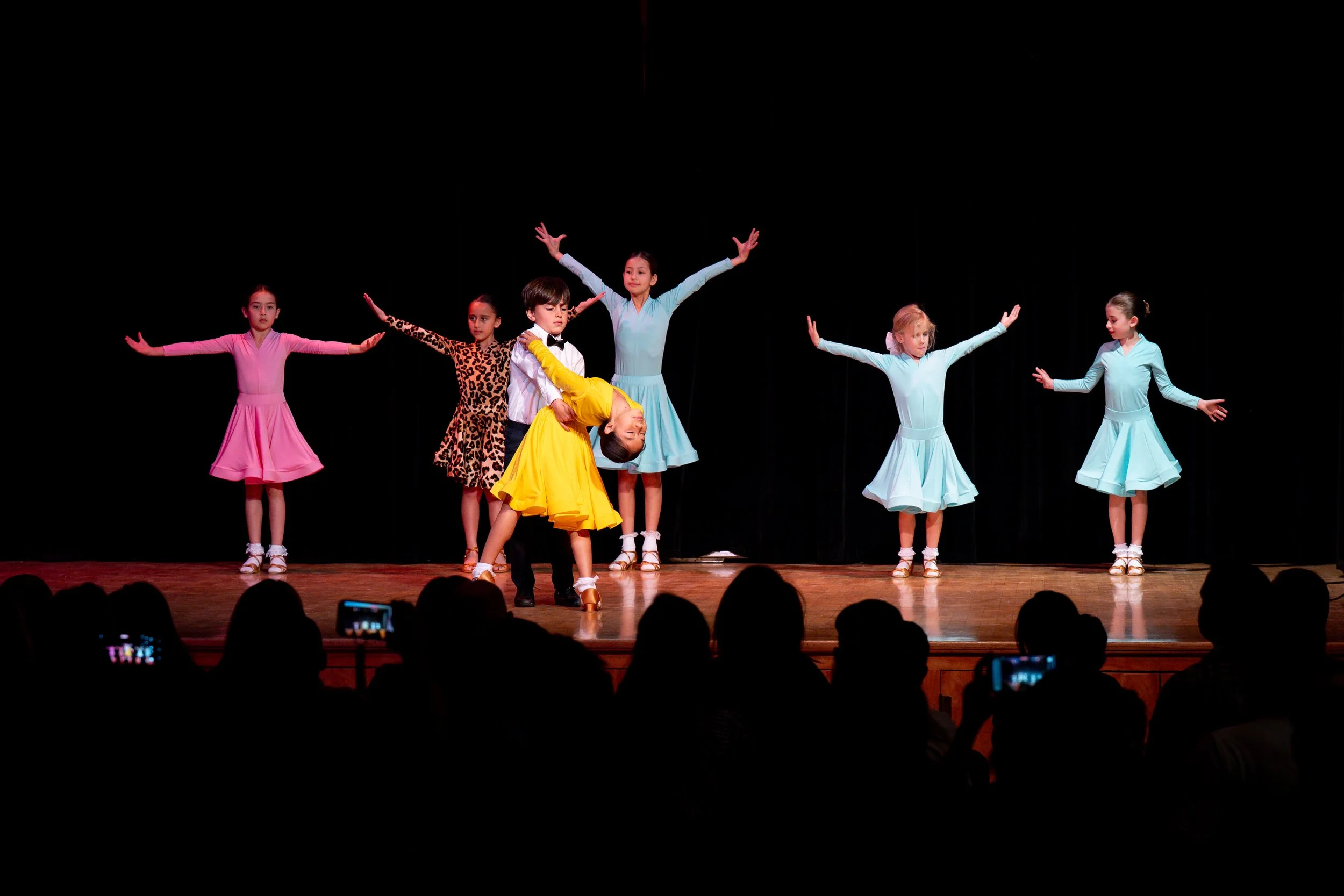
It is a moment to be seen, to feel capable, and to know that they are worth watching. And it is joyful! Dancers get to dress up, step into the spotlight, and be the stars of the show.
The Laird Academy programs are inspired by classic British ballroom dance tradition. Students learn dances like Waltz, Jive, Foxtrot, Cha Cha, Tango, Samba, Rumba, and more.
DANCES WE TEACH
VISIBILITY INTO PROGRESS
The Dance Book
In their first class, every student receives The Dance Book — a personal record of their full journey, from the very first step to the Annual Show performance at the end of the year. Inside: their steps, progress, and the teacher's notes. Parents can follow along at every stage, as each achievement is recorded and celebrated along the way.
MEET THE FOUNDER
Miss Christina Androsenko.

Founder & Lead Teacher · US National Vice Champion
“The Laird Academy was born from an idea of bringing ballroom dancing — the most elegant dance form — into school, making it accessible to every child, right where they already are, while maintaining the highest quality of dance education, technique, and performance.
Dance transformed my life, giving me opportunities and skills I could not have imagined as a child when I first began to dance.
I vividly remember the first time I saw a ballroom dance performance. My elementary school friend Yana performed Jive at our school concert with her dance partner. To this day, I remember every detail — Yana's fire-orange fringe dress and the exhilarating moves they danced together. I even remember the song: "Chihuahua Jive." As a child, I thought it was the most exciting thing I had ever seen — and this was coming from a girl who had already spent several years in ballet school. Yana's performance felt so sophisticated and undeniably 'cool' — and, at that age, being 'cool' felt like an important thing 🙂
So I asked my parents if I could try a ballroom dancing class.
That moment — watching my friend perform at a school concert — set in motion a journey that eventually took me to England to study dance, and then to perform across the world, from Europe to Japan, and finally to move to the United States. My dance partner and I became US National Vice Champions and represented the United States at two World Championships. We became finalists on So You Think You Can Dance.
Each of those years of dance and performance brought its own kind of excitement. But what dancing truly gave me was never the titles. It was discipline, courage, and the ability to perform when the stakes are high. Dance opened the world of beauty and art for me. It taught me how to be a team player. And most importantly, it gave me the ability to handle mistakes and losses — the natural companions of every learning and every success.” —Christina.
NOW ENROLLING | ACADEMIC YEAR 2026/27
Fall 2026 enrollment is open. Spots are limited.
Classes fill on a first-come, first-served basis. Families who reserve early are confirmed before the waitlist opens.
Once the semester begins, enrollment closes until the next window.
Frequently Asked Questions
-
There is no wrong age to begin. The Laird Academy accepts students from ages 5 through 11.
5-8 y.o. students join the Rising Stars group. Classes are 45 minutes once a week.
For more extensive learning, students 8-11* years old join the main Academy group. Classes are 45 minutes twice a week. At that age, students’ development and attention span are ready for twice-a-week classes with a progression from Ensemble to Principal. An Ensemble student can reach Soloist level within a year.
*Students who are younger than 8 years old can join the twice-a-week Academy program at parents’ discretion or teacher recommendation.
-
Enrollment is for the full academic year—August through June with two semesters: August- December & January-June. The pay-by-semester or pay-monthly options are available.
Each academic year builds toward one big goal - the Annual Show. Students who start in September follow the full program. They learn more steps. Choreography grows more advanced. Technique improves with every class.
Beginning-of-year enrollment is encouraged. It gives students the most time to grow and advance to Soloist or Principal roles.
Mid-year enrollment opens at the specific enrollment windows. Students who join mid-year are not behind. The Academy enrollment has built-in levels. A new student joining in the middle of the semester can still perform at the Annual Show at their level in the dance company with appropriate choreography complexity.
Students may also appear in school talent shows and assemblies throughout the year.
30-day satisfaction guarantee for NEW families: Not the right fit within 30 days? Email thelairdacademy@gmail.com for a refund of the remaining balance.
-
Students ages 5-8 attend once a week. The Rising Stars program is built for their age.
Students ages 8-11 (and some advanced learners 6-7 years old*) attend twice a week - The Academy Enrollment with three levels of difficulty. That frequency is deliberate. Two classes a week build consistency, focus, and discipline. It also offers a good balance of technique and physical activity without burnout.
-
Rising Stars Enrollment— One class a week: Fall semester (August–December) · $480/semester or $120/mo; Spring semester (January–June) · $600/semester or $120/mo
Academy Enrollment*— Two classes a week: Fall semester (August–December) · $840/semester or $210/mo; Spring semester (January–June) · $1050/semester or $210/mo
The Dance Book and all in-class materials are included.
-
Yes. The Laird Academy accepts new students at a few enrollment windows throughout the academic year. Between windows, interested families are added to the waitlist and contacted directly when the next window opens. Check our Enrollment Page for all open enrollments.
Beginning of the year enrollment is encouraged to ensure progression to Soloist and Principal parts in the company.
Students who join mid-year are not behind. Academy enrollment is designed with three levels of difficulty (Ensemble, Soloist, and Principal) built in from the start — a child joining in the middle of the semester can learn the steps for their level and perform their part in the dance company at the end of the year Annual Show.
Mid-year enrollment is prorated to the remaining months.